

Story audio is generated using AI
The state-owned special risk insurer, the South African Special Risk Insurance Association (Sasria), is inching closer to its R30bn reserve target after the 2021 riots, and could reach it as soon as 2029.
Finance minister Enoch Godongwana said Sasria’s R5.2bn profit and R23.8bn reserves protect the economy against the lasting damage of systemic unrest, and restore Sasria’s capacity to respond to future catastrophic events.
“In respect of capital strength, the National Treasury commends Sasria’s strategic objective of reaching R30bn in own funds. Retaining earnings to rebuild this buffer is important because it strengthens Sasria’s resilience and ultimately protects the fiscus,” he said.
“On [its capacity], there are serious cases for examining whether the risks Sasria carries should extend beyond politically motivated unrest to climate-related and agricultural perils, which are increasingly systemic and from which conventional insurance markets are retreating.”
Sasria board chair Nolwandle Mgoqi said the accumulated loss that had weighed on the balance sheet since the events of July 2021 had been fully reversed.
“The company now carries positive retained earnings of R1.8bn. This represents an important milestone in Sasria’s recovery and reflects the disciplined execution of the strategy, prudent financial management and the sustained commitment of the organisation’s people.”
She said work also continued on the reintroduction of wrap cover, which became effective on 1 April 2026. “The arrangement has been structured so that Sasria retains 20% of the risk, with the balance ceded to reinsurers. Work also continues on the proposed enhancement of ministerial powers to provide greater clarity regarding Sasria’s mandate.”
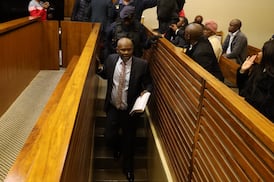
The arrest of then president Jacob Zuma in 2021 triggered protests in KwaZulu-Natal, Gauteng and Mpumalanga, causing an estimated R50bn in damages.
However, according to Sasria’s integrated report for 2025/26, the insurer recorded a profit of R5.2bn and ended the year with reserves of R23.8bn, marking continued progress in rebuilding its capital base following the events of July 2021.
Godongwana said Sasria had assessed the pricing, reinsurance and operational implications at a preliminary level, and that the work was under consideration. A broader mandate had to be matched by capital, reinsurance capacity and the actuarial discipline.
“Sasria has effectively closed the chapter on the July 2021 unrest, with only R77m in claims remaining open from total losses of R31.3bn. This represents substantial closure of a difficult period, achieved alongside the rebuilding of the balance sheet.”
The minister said the pressures that shape Sasria’s operating environment remained firmly in place, including strained municipal service delivery, failing water infrastructure, labour unrest, youth unemployment and protests against undocumented immigrants — pressures no economy could absorb indefinitely.
“The local government elections of November 2026 fall within the year ahead. Government expects that Sasria will continue to strengthen its risk intelligence, extend affordable cover to the small and medium enterprises least able to absorb a loss, and price its products so that this cover remains within reach.”
He said comparable institutions in Spain, the UK, the US and Australia assisted private markets to carry risks, while the role of the respective states remained, making certainty possible where the private market could not.
Sasria CEO Mpumi Tyikwe said the company grew gross written premium by 9.2% to R6.4bn, achieved nine of its 11 key performance indicators and recorded a profit of R5.2bn, taking equity to R23.8bn at year-end.
“The growth in equity is critical to building reserves to withstand future catastrophic events like the one experienced in July 2021, which caused claims of R31.3bn over ten days. The year was the second of Vision 2029, our strategy to build a resilient, relevant and sustainable special risk insurer with reserves of R30bn by 2029. At R23.8bn of equity, we are firmly on that path.”
He said capital was strengthened through earnings and a fully subscribed reinsurance programme for the first time in three years. Predictive capability was also being built through the data and intelligence programme.
“Growth outpaced the market with premium up 9.2%, exceeding a budget of R6.2bn, and our transformation mandate was carried through R43.7-million of CSI investment focused on education and skills development.”
Insurance expenses decreased by 20%, and the combined ratio of 40.0% was well within the 80% target. The claims function settled 93% of claims within the targeted turnaround time — against a target of 85% — and no claims were overturned by the ombudsman during the year.
The investment portfolio returned 7.51% gross against a benchmark of 5.47%, generating net investment income of R1.3bn. The net reinsurance expense increased by 91% to R1.1bn, reflecting the increased quota-share ceding rate.
Business Times





Would you like to comment on this article?
Sign up (it's quick and free) or sign in now.
Please read our Comment Policy before commenting.