

Story audio is generated using AI
The country’s top teacher, Mpho Mosala, recommends that daily reading become routine in classrooms to tackle illiteracy amid gloomy data that 81% of grade 4 pupils fail to reach the lowest international benchmark for reading comprehension.
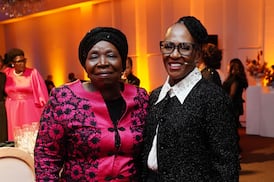
Mosala, a Sesotho home language teacher at Letlotlo Naledi Primary School in Bothaville, Free State, was awarded top honours at the 26th National Teaching Awards hosted by the basic education department in Benoni on Thursday.
Rather than relying solely on twice-yearly formal reading assessments, Mosala makes reading a continuous classroom activity.
“That’s the advice I would give other teachers: not to do it only twice a year, but to ensure that every day a learner reads. The more they read, the more they understand,” she said, adding that a wide variety of reading material was essential.
Mosala uses reading corners stocked with texts in Sesotho and English to encourage pupils to find pleasure in reading beyond prescribed classroom books. While home language materials build comprehension, English books offer crucial exposure to an additional language.
As a result, Mosala noted that her pupils have become increasingly proactive in class — asking critical questions not directly answered by the text, explaining what they have read in their own words, and sharing books they enjoy across different grade levels.
Her support extends well beyond formal lessons. Mosala, who teaches grade 6 now but started her career with grade R, collaborates with an NPO near her school to assist children facing learning barriers and continues to track their progress long after they move to high school.
“I also follow up on my learners, especially those moving from primary to high school. I still communicate with them even now. So I think that’s what makes me stand out as a teacher, because they are not my learners, but I take them as my kids,” she said.
Mosala originally hoped to become a social worker, influenced by being raised by her grandmother, not knowing her biological mother and growing up on a social grant. The social work course was oversubscribed, so she opted for teaching.
She said it had enabled her to help people in a different way to social work, and her experience had helped her understand and support pupils facing difficult circumstances.
Her success comes as the education department strengthens the rollout of new measures to strengthen early grade reading.
The department is focused on foundational literacy and numeracy, with 10,000 foundation phase teachers expected to receive targeted training during the 2026/2027 financial year.
At Thursday’s awards, President Cyril Ramaphosa acknowledged that the government needed to strengthen foundational literacy and numeracy and spread successful teaching practices across the education system.
“Good practice should not remain a secret. It should become part of the commonwealth of our education system,” Ramaphosa said.
The basic education department’s Funda Uphumelele National Survey, which assessed about 28,000 grade 1 to 3 pupils at 710 schools, found that only 31% of grade 1 pupils reached the home language benchmark of 40 correct letter sounds a minute.
The pattern was similar for grade 2 and 3 pupils. These results followed the 2021 progress in the International Reading Literacy Study (PIRLS), which found that 81% of grade 4 pupils did not reach the lowest international benchmark for reading comprehension.
- This story was produced by The Education Desk, an independent NPO newsroom dedicated to addressing schooling challenges in South Africa.
TimesLIVE






Would you like to comment on this article?
Sign up (it's quick and free) or sign in now.
Please read our Comment Policy before commenting.