
Now that the count is almost over, what sort of coalitions should we hope for? They should be stable. More importantly, they must professionalise city government. This is especially true in Johannesburg and the other metros.
To see which coalition could do that in Johannesburg, let us start with what voters did.
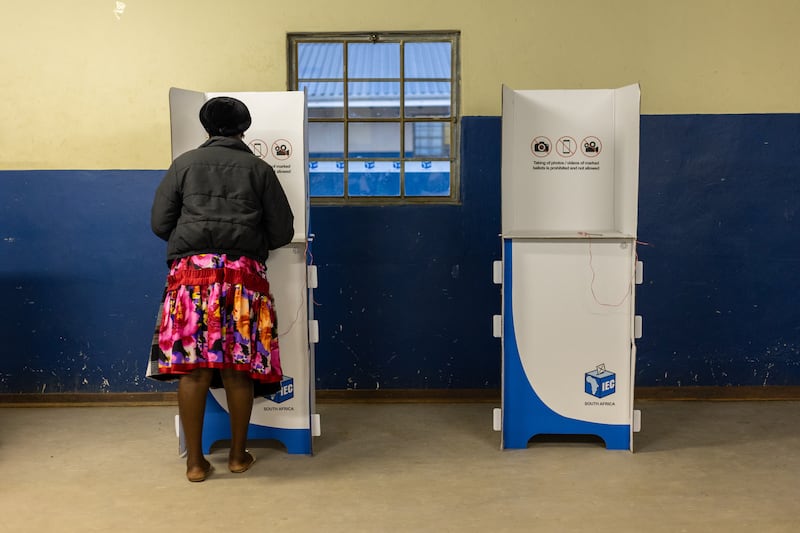
Before the election, most pollsters and commentators said turnout would decide the result. The picture has turned out to be more complex. I looked at 12 Johannesburg wards, where most of the count was complete by Friday morning. There was a surge in the suburbs. In the ward that includes Constantia Kloof, Little Falls and Florida Park, turnout was almost 72%. In the northern suburban wards it was above 60%.
Turnout in historic township areas was lower, though, and here is the surprise: it has been robust. It ranged from 45% to 59% and averaged about 51%. Turnout across the whole city in 2021 was 42%.
So, the ANC’s weakness is not that people in its strongholds stayed home. They voted, but many did not vote for the ANC. In the Soweto wards I examined, the ANC took between 28% and 41% of the vote. In 2021 it took between 45% and 61% in the same areas.
Where did those votes go? In several of these wards, ActionSA came second with more than 20%. The MK Party and the IFP did well in others. The DA took between 11% and 21%, and in most of these wards it finished ahead of the EFF. The DA’s own projection is that it won about 15% of the vote in Gauteng townships. That figure has not yet been confirmed by the IEC.
So, the ANC’s weakness is not that people in its strongholds stayed home. They voted, but many did not vote for the ANC
This explains an unusual feature of the count. Normally the mood in the ANC lifts as counting goes on. Large township stations report later, and the ANC’s share rises as they do. That did not happen in Johannesburg. At 10am on Thursday, with 9% of districts counted, the DA had 41% and the ANC had 17%. The DA dipped to 37% in the late afternoon. By 10pm it was back at 41%. The ANC was still at about 17%, even as Soweto ballots were counted.
The pattern differs from city to city. In Johannesburg the DA itself grew strongly. In Tshwane and Ekurhuleni, ActionSA profited from the shift. In eThekwini it was the MK Party. What the cities share is that the ANC’s base is fragmenting. Large numbers of former ANC voters are now available to other parties.
What does this mean for Johannesburg?
There is no prospect of a nationalist alliance of the ANC, EFF and MK Party. Together they have about 30% of the vote. The Patriotic Alliance, at about 1%, would make no difference.
The DA is the largest party by far, with about 40% on the current count, but it is short of a majority. It needs roughly 10 more points. ActionSA, with 16% to 17%, could supply them. The ANC could too.
It is no secret that there is no love lost between Herman Mashaba and the DA. He ruled out a partnership during the campaign and has softened since. His alternative is an alliance with the ANC, the EFF, the MK Party and several smaller parties. On the current count, that grouping is still short of a majority. Even if it got there, it would be a coalition of five or more parties, which is the sort of arrangement that has made Johannesburg ungovernable since 2016. More importantly, it would be dangerous for the ANC. ActionSA is growing at its expense.
Tshwane shows where such an arrangement could lead. In October 2024 the ANC helped install an ActionSA mayor there. Two years later, ActionSA has gone from 8% of the vote to 24%. The ANC has fallen from 34% to 21% and now sits in third place, behind the party it put in office.
The question, though, is not simply which parties can form a majority. It is which coalition would produce a capable government?
The DA is the largest party by far, with about 40% on the current count, but it is short of a majority
Recent research by the New South Institute shows that the crisis in Johannesburg and other municipalities comes largely from a weakness in how local government is structured. The law does not protect the administration from politicians. The municipal manager is the head of the administration but acts subject to the council’s direction. The council appoints the municipal manager and the senior managers. It may also instruct any councillor or official to perform municipal duties.
Unless the governing parties deliberately protect the administrative space, councillors and parties take it over. They hire their own people and award tenders to friends and benefactors. This is how Johannesburg’s utilities came to be run as party fiefdoms, used for extracting rents.
Which combination of parties would professionalise the city’s administration?
One option is a DA and ActionSA coalition. The two would have to settle who is mayor, since Helen Zille and Mashaba are candidates. Whatever they decide, the agreement must limit the mayor’s power over the administration. It must also provide for a capable city manager with real authority.
Another option, perhaps a better one, is a DA and ANC coalition. At national level the ANC has shown itself sympathetic to professionalisation and to politicians giving up administrative powers. The provincial and local ANC may find it hard to accept a junior role in the city. Yet with its base drifting to other parties, a spell of humility in a capable urban government might save it from oblivion.
The DA is in a powerful position. On current counts it is the largest party in six of the eight metros. It can reach different agreements in each city, but it should set one common condition. Whoever is mayor, the council must appoint a professional city manager with the powers and authority to run the administration.
- Chipkin is director at the New South Institute
TimesLIVE




Would you like to comment on this article?
Sign up (it's quick and free) or sign in now.
Please read our Comment Policy before commenting.