
Story audio is generated using AI
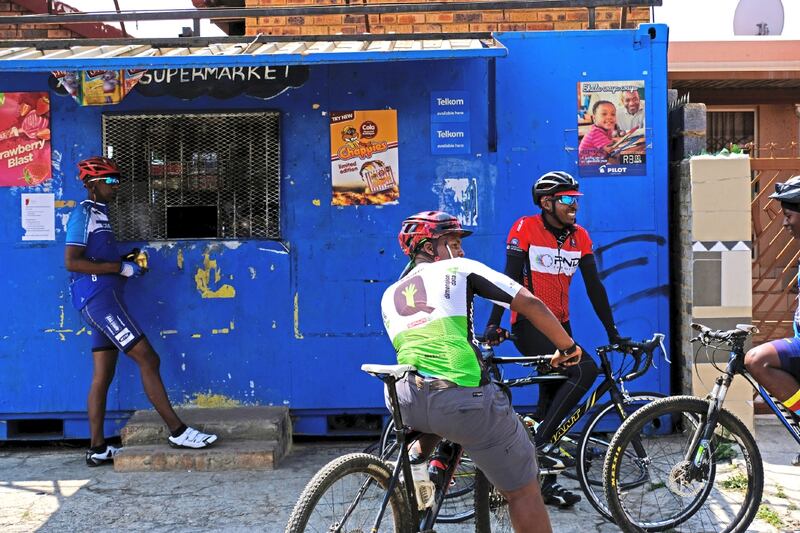
Township economies are complex. They come from a South African history of socially engineered urban growth and marginalisation, macro- and micro-level systems of power and decision-making.
Home to more than 15-million people, the township economy has a story to tell.
Established under apartheid legislation designed to segregate black South Africans into designated residential areas, isolating them from the broader economy, the townships have become the centre of attention as corporate South Africa scrambles for a share of the mass-market wallet.
While the government has made efforts to redress apartheid’s spatial planning, which saw townships located on the peripheries of cities to serve as labour reservoirs for menial work, these areas have shaped the country’s informal economy — said to be worth R900bn annually.
The Competition Commission this week released its inaugural “Rural and Township Economy Report”, which showed that while there is significant business activity in townships, most businesses remain survivalist in nature, with a high presence of informal businesses.
The findings should not surprise those who have followed the “unseen” economy.
It is this vast, underfunded informal market that corporate South Africa is targeting, with point-of-sale machines loaded with value-added services as the calling card.

While big businesses have woken up to the potential this market has, significant barriers still exist for players operating in this sector.
The Competition Commission listed three overarching barriers:
- Procurement: small businesses in the townships and rural areas rely more on smaller suppliers, wholesalers and intermediary channels, which can leave them with less scale and bargaining power.
- Regulatory red tape: permits, licences, zoning rules, municipal bylaws, business registration, tax compliance and other requirements can impose significant costs and delays.
- Limited routes to market: 51% of township businesses and 48% of rural-town businesses sell through their own physical stores, compared with only 6% and 10%, respectively, that sell through major retailers.
The essence of the commission’s findings is that the barriers facing rural and township businesses also have direct consequences for consumers, with many shopping outside their own township or rural town for products such as food and groceries.
The commission’s commissioner, Doris Tshepe, said creating a more enabling environment for rural and township businesses was central to tackling poverty, unemployment and inequality.

“Whilst many in the formal sector see the collective value of the so-called kasi economy, inequalities will only reduce if residents in these rural towns and townships actively participate in that economy and are able to expand beyond its borders to participate in the formal malls and online purchases of middle-class South Africa,” said Tshepe.
“Addressing these barriers is important for spatial transformation, local enterprise development and consumer welfare. Improving market access and reducing red tape could make it easier for township and rural businesses to grow, create jobs for unemployed youth in these economies, and participate more meaningfully in the economy. This will require co-ordinated action by business, local government, regulators, and key role players.”
A study by Standard Bank revealed that nearly 80% of township businesses remain unregistered.
A study by Standard Bank revealed that nearly 80% of township businesses remain unregistered. According to Stats SA, unregistered businesses are those that operate outside formal regulatory frameworks, including VAT registration, labour regulations and tax compliance.
The Standard Bank survey, conducted across Gauteng, KwaZulu-Natal, the Western Cape, Limpopo and North West, covered enterprises with annual turnovers ranging from R100,000 to R50m.
Among the key findings of the survey are that:
- Entrepreneurs often face up to 20 similar businesses per community, squeezing margins;
- Fewer than 9% have access to bank loans, with most relying on personal savings or family support; and
- As many as 49% of businesses operate from homes or garages, with only 11% in commercial premises.
Among the measures taken by the government over the years is the inclusion of small businesses in state procurement, while companies have several supplier development programmes to give them a leg up.
Janice Johnston, CEO of Edge Growth Ventures, said there was a gap between corporate transformation goals and SME reality.
“The failure is one of design: a mismatch between what we say we value and what we actually measure and reward,” she said. “We treat procurement as a short-term exercise in lowest price and risk, when it should be a long-term lever for growth.
“Every rand spent with a growing SME isn’t just a cost line; it’s potential jobs, a bigger tax base, economic activity in townships and rural areas, and growth in the very market that corporate sells into. Small businesses make up around 40% of South Africa’s GDP and most of its employment.
“A buyer who only sees unit price is optimising one cell in a spreadsheet while ignoring the economy that spreadsheet sits inside. That’s the shift from linear to systemic thinking, and it’s the most important idea in this whole conversation.”
Business Times




Would you like to comment on this article?
Sign up (it's quick and free) or sign in now.
Please read our Comment Policy before commenting.