

Story audio is generated using AI
Water and sanitation minister Pemmy Majodina says 27 new cases of gastrointestinal illness were recorded in Bronkhorstspruit over the past 24 hours.
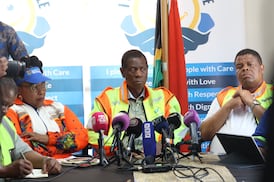
Majodina was briefing the media on Monday after an oversight visit to the Bronkhorstspruit water treatment plant believed to be responsible for 833 people falling ill from drinking contaminated water.
The plant has been shut down to allow for cleansing and the restoration of its chlorine supply.
According to Majodina, the new cases may have occurred because, “some people kept water [even after the government warned them not to come into contact with tap water], while others were getting water from private tankers. And we don’t know where that water was treated.”
“It does not mean there is an outbreak,” she added. “Those people [patients] come in and go out and the hospital records statistics. Even if you come in for a minute or two, it gets recorded.”
A government delegation, led by deputy president Paul Mashatile, visited the treatment plant as part of the work of the inter-ministerial committee on water and sanitation, which he chairs.
It was reported that the water was contaminated after the treatment plant ran out of chlorine for several days during September and October.
Of the 833 who were recorded to have fallen ill, 328 were children aged four and younger. “You would understand that the immune system of children at that age is weak,” said Majodina.
WATCH | Minister Pemmy Majodina says 833 cases have been recorded of people treated for gastrointestinal illness in Bronkhorstspruit. pic.twitter.com/ScBVW9DmSc
— Sowetan (@Sowetan1981) October 26, 2026
She added that only three people affected by the water were currently in hospital. “Since October 7, the admissions have not exceeded more than three days. People have not been very critical, and there are no reports of ‘returns’ after treatment.”
During the same briefing, Tshwane mayor Nasiphi Moya announced short-term interventions to ensure residents had access to water. “Water tankers are moving between 8am and 8pm. There are two hydrants where the water tankers draw water from. We have 36 water tankers provided by the city. Coca-Cola has been generous and they have added three tankers as well.”
Moya said she had asked the Tshwane metro police department to follow the water tankers to ensure that the water they collected was safe, and to verify where the tankers were sourcing it from.
She revealed that the city had ordered an external investigation into the chlorine supply arrangements, including the procurement processes and decisions that led to a shortage at the Bronkhorstspruit water treatment plant.
“Anyone who is found to have been negligent in their responsibilities in terms of chlorine non-availability, or communication of chlorine non-availability, will be fired. However, there are other external investigations that are happening as well, such as criminal investigations that have been opened,” she said.
Asked whether she believed the Bronkhorstspruit crisis had tainted her name and her local election campaign, Moya said the focus was now on resolving the crisis. “Worry less about the reputation and the campaign. We are dealing with something serious here. We are dealing with people’s lives, which have been put at risk, and the situation needs to improve before we care about what it means for us,” she said.
Sowetan



Would you like to comment on this article?
Sign up (it's quick and free) or sign in now.
Please read our Comment Policy before commenting.