

The suspension of public protector Busisiwe Mkhwebane by President Cyril Ramaphosa pending a parliamentary inquiry into her competence demonstrates the danger of the ANC’s redeployment policy. It parachutes ill-suited cadres to top positions, destroying democratic institutions, their careers and, ultimately, confidence in democracy.
Mkhwebane’s appalling decisions, actions and behaviour have tarnished the credibility of this important constitutional office, plunged it into disarray and undermined its operations and effectiveness.
Mkhwebane, handpicked by the ANC leadership, was foisted into the position above more suitable, competent and publicly credible candidates in October 2016 by the ANC using its parliamentary majority. To give this a veneer of “independent” decision-making, ANC insiders set up a false flag by informally suggesting judge Siraj Desai was earmarked by the party, but that Mkhwebane was then president Jacob Zuma’s preferred candidate.
Nevertheless, she was uncritically backed by all members of the ANC caucus without a single voice of dissent recorded, in spite of civil society, opposition party and media reservations.
I wrote at the time that this would be another case of an unsuitable cadre being elevated to a top job, which would bring tears to Mkhwebane and harm the credibility of the public protector’s office, to which citizens look for redress in official abuse, neglect and corruption.
When she was appointed she had a close personal and political relationship with Zuma, who faced a litany of complaints about corruption, mismanagement and incompetence - matters a public protector is expected to investigate.
On June 13 the presidency received a letter from Mkhwebane demanding her suspension to be set aside by the close of business the next day or the president would face further legal action.
The Western Cape High Court has dismissed Mkhwebane’s application for urgent interim relief, in which she sought to interdict the speaker of the national assembly and the parliamentary committee from taking steps against her. She argued that her office was dealing with several investigations implicating Ramaphosa in wrongdoing and he was therefore not qualified to act against her as it amounted to a conflict of interest. The court dismissed her application.
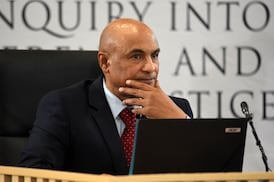
This week, the parliamentary committee began an inquiry into Mkhwebane’s fitness to hold office, summoning witnesses to give evidence.
Many of the suspended public protector’s decisions have been so poor they have been set aside by the courts. She also controversially appointed senior staff members who were dismissed from other government departments because of incompetence, corruption or misconduct. Mkhwebane is also accused of purging staff members who questioned her decisions.
When she was appointed she had a close personal and political relationship with Zuma, who faced a litany of complaints about corruption, mismanagement and incompetence — matters a public protector is expected to investigate.
Throughout her time in office she was perceived to be aligned with the Zuma faction of the ANC and the EFF. She has vigorously denied this.
Until her appointment Mkhwebane was an ANC and government apparatchik, a “loyal cadre” in ANC parlance, who had never publicly criticised any questionable government decision or stood up for anyone marginalised by the state.
The rule of thumb should be that no one who has spent time in intelligence agencies should be appointed to preside over democratic oversight institutions.
Worse, Mkhwebane worked for an extended period at state intelligence agencies. According to a profile on her by journalist Phillip de Wet, when she worked in SA’s Chinese embassy as an immigration officer, she was known as “Meng Xi”. As public protector it was alleged Mkhwebane, during her investigations into the apartheid bailout of Bankorp, the Absa’s predecessor, recommended the nationalisation of the Reserve Bank. At the time, the bank was seen by the Zumas and Guptas as a key obstacle to their full capture of the state.
The rule of thumb should be that no one who has spent time in intelligence agencies should be appointed to preside over democratic oversight institutions.
Cadre appointment is not in the public interest. It goes against the values, rules and prescripts of the public service. It is unlawful. It is unconstitutional. It is a threat to democracy.
Given all the spectacular failures of cadre deployment in public leadership positions, it is important civil society and opposition parties challenge such appointments in court when more capable applicants have been identified.
Furthermore, parliament, government and SOEs must give reasons why candidates with better resumes who are not connected to the ANC leadership are sidelined from critical government and democratic oversight institutions.
William Gumede is associate professor, School of Governance, University of the Witwatersrand, and author of ‘Restless Nation: Making Sense of Troubled Times’ (Tafelberg).






Would you like to comment on this article?
Sign up (it's quick and free) or sign in now.
Please read our Comment Policy before commenting.