
In 2007 February in my keynote address at the UN Statistics Commission, on “The statistical commission and the global statistical system: The way forward”, I said: “To understand the development of statistics in, and of the world, we need to take a historical perspective and analyse the glacial political movements of the world that are intrinsically associated or are a consequence of these political forces.” The 60th anniversary of the UN statistics commission provides an important opportunity to forge ahead with this analysis and the questions it raises or might raise in the future. The end of WWI, the establishment of the League of Nations in June 1919 and the convening of the International Statistics Commission in 1920 tell an interesting tale in the global development of statistics.
The establishment of the UN in 1946 after the collapse of the League of Nations and the formation of the UN Statistics Commission (UNSC), in 1947, a year after the formation of the UN, is a critical illustration of this important trajectory. The milestone relating to the adoption of Fundamental Principles of Official Statistics is yet another major contribution by statisticians regarding the conduct of world politics and its implications on statistics. The development of the Millennium Development Goals (MDGs), the call for the transformation of the UN systems of governance and statistical capacity building, may not be idle coincidences of this decade. This is instructive of the fundamental link between statistics and the desire for world peace and stability, the way the world reasons, experiments and forms opinions. An aspiration for transparent representation of phenomena and thereby enhancing accountability of nations and the world. Crisis and instability in the world appear to be the midwife for statistics, and if this is true, the converse is that statistics should be crucial for world peace.
The operations of the commission have always been run on consensus and persuasion through fact and logic. This remained the hallmark of Kathy.
Statistics is a conduit of trust. Only those immersed in this noble programme can be entrusted with the innermost workings of society. The world is on a knife edge on all fronts; a polycrisis of climate, war and inequality. This year four-billion people will be going for an election across at least 70 countries. For them to make a rational and logical decision as to who to vote for, they will need a Katherine Wallman.
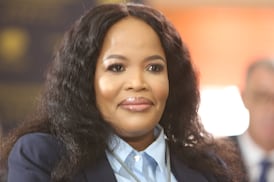
Wallman, the chief statistician of the US from 1992 to 2017, is no more. She wore rich silky hair, a stern and assertive voice, had a wicked sense of humour and contributed significantly to breaking up the boys’ club at the UN Statistics Commission. Wallman, like those she succeeded and those who followed, probably occupied the most powerful office any statistician of a country could occupy in the world. She sat in the fire itself — the Office of Management and Budget (OMB). I served a period that overlapped with Kathy’s as I became the statistician-general of my country from 2000 to 2017.
I used to envy the powers Kathy had in her role. In this capacity she, per delegated authority from the director of OMB, presided over the Office of Information and Regulatory Affairs (OIRA) as its administrator of statistical and science policy. When she joined the UN Statistical Commission, Wallman would have possibly been the only woman chief statistician, or at the very least one of a very few. Kathy narrates how the chief statisticians referred to her: “When I first attended the commission in 1993, the then-chair referred to me as the lady statistician — a distinction that has disappeared as more women have become chief statisticians in their respective countries.” She never failed to remind the commission how far it came and how far it is yet to go.

Further differences Kathy felt were the divide between developing and developed countries. Kathy had a heart and mind for change and change she led and observed as it progressed. On this score she said: “I must admit that when I first attended the commission in 1993 — literally some six weeks after taking on the US chief statistician role — I was struck by the fact that the commission felt like it was two separate events. One event for the developed economies, whose chief statisticians were more focused on creating more complex methods such as for national accounting, and the other for the developing economies, who were most focused on building core statistical capabilities in their respective nations. But through the commission itself, and particularly through the regional commissions, these gaps were substantially bridged.”
The operations of the commission have always been run on consensus and persuasion through fact and logic. This remained the hallmark of Kathy. This she pursued throughout her career though at times the diplomats, especially from the US would suddenly fill the space of the US flag whenever controversy arose in the commission. Despite this inconvenient invasion of the commission by the diplomats, Kathy kept her composure and soon the storm in the tea cup would subside and the business of the commission would need interruption no more.
However, once upon a time an impasse occurred regarding the Millennium Development Goals. The division between developed and the developing countries normally referred to as the group of seventy-seven plus China went toe-to-toe with the rest at the commission over the percentage of gross national income the rest committed to contribute to the developing world. Kathy was the chair of the commission, having taken over from Tamas Mellar of Hungary. Mellar had operated under extreme pressure especially when the agenda item of MDGs was tabled. Kathy calmed the stormy waters with her motherly charm. She had a wicked sense of humour and had this teasing relationship with Bela Piggly, a senior statistician from Canada. Bela liked chocolates and Cathy always kept chocolates for Bela. She would elbow me on the side and wink to alert me of Bela and chocolates. Then she would call Bela and say Bela, would you like to have a chocolate? And Bela would oblige. Kathy was a great mentor. She had an inseparable bond with Jennifer Park. I recall in the first in-person commission after Covid-19 having an interesting discussion with Jenny about Kathy. And Jenny would discuss this motherly love and mentoring she got from Kathy. Kathy was a grandmother. No-one needed to be told as she would proudly parade her toddler grandchildren in a pram for us. The toddlers were always on display with rosy cheeks from the chilling wintry New York weather.
Kathy lived by her principles. On January 10 2018, we petitioned the Greek against persecuting Andreas Georgiou, the former chief statistician of Greece, the signature of Kathy could be relied upon. A part of a strongly worded letter to the Greek authorities read: “We the undersigned organisations and individuals call on Greek authorities to halt the legal proceedings against Andreas Georgiou, the former president of the Hellenic Statistical Authority (ELSTAT), and other senior ELSTAT officials for their ELSTAT work under Georgiou’s leadership 2010-2015. The government deficit and debt figures, produced by ELSTAT under Dr Georgiou’s stewardship, have been validated numerous times by Eurostat as complying with the highest international standards. Further, Dr Georgiou during his tenure leading ELSTAT strictly followed the best practice statistical principles enshrined in European Union and Greek law.”
The case of Georgiou remains far from over, but Kathy will be presiding over it from an ancestral village of statisticians.
May the soul of Katherine Wallman rest in peace.
Dr Pali Lehohla is a Professor of Practice at the University of Johannesburg, a research associate at Oxford University, a board member of Institute for Economic Justice at Wits and a distinguished Alumni of the University of Ghana. He is the former statistician-general of South Africa.




Would you like to comment on this article?
Sign up (it's quick and free) or sign in now.
Please read our Comment Policy before commenting.