

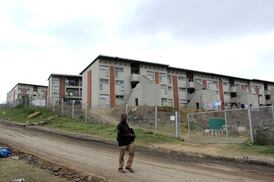
The KwaZulu-Natal department of health has been authorised to evict a nurse from a three-bedroom duplex within the Inkosi Albert Luthuli Central Hospital residential village, where she has been living for more than nine years, paying only R900 a month.
Nursing sister Phindile Sibiya has been instructed to move out before the end of this month or face eviction by the sheriff. The health MEC may also claim the outstanding amount Sibiya owes in unpaid rental tariffs and ordered Sibiya to pay the costs of the court action against her.
According to the Durban high court ruling, Sibiya is a state hospital employee and therefore qualified for housing within the residential village owned by the government. The duplexes within the village are reserved for the temporary use of newly transferred staff waiting for other accommodation in Durban and visiting exchange doctors from overseas.
“However, from time to time, these duplexes may be offered to hospital staff. When this occurs, the period of accommodation is restricted as it is intended, primarily, to be short-term accommodation not exceeding six months,” the court noted, with the monthly tariff being R1,500.
Employees allocated a duplex are required to sign a lease stipulating the duration of their occupation. Sibiya was given a duplex consisting of three bedrooms, a kitchen, a dining room, a lounge, a bathroom, one shower and two toilets.
Sibiya initially took up accommodation in the hospital’s residential village in August 2005. In terms of her original lease, she was allocated an en-suite unit. This was a single room with a bathroom, and the arrangement was long-term.
But after eight years, Sibiya made a written request to the hospital’s senior management team for permission to move into a duplex.
“I need not go into the reasons, but they centred largely on social issues concerning her niece,” the court said, noting that Sibiya had offered to pay extra for the duplex accommodation, claiming the arrangement would be temporary until she bought her own property.
The hospital is intended to operate for the benefit of the general community as a whole and to do so needs to attract medical personnel who can deliver medical services to that community. By defiantly remaining in occupation, the respondent makes this objective difficult to achieve.
— Durban high court
Sibiya moved into the duplex in October 2013, and though there was no written lease in place, there was an oral agreement that she would vacate the property within six months, on or before March 31 2014.
When Sibiya failed to move out as agreed, she was given written notice in August 2015, demanding that she vacate the unit before October 31 2015, and that the en-suite unit she had previously occupied was vacant and available for her to move back into — meaning that she would not be left homeless.
But Sibiya ignored the demands and continues to occupy the duplex, paying only R900 per month instead of the full R1,500 a month. As part of her R35,000 monthly salary, she receives a R1,336.32 housing allowance.
“Due to some anomaly, a maximum amount of R900 per month may be deducted from an employee’s salary in respect of accommodation provided. There is thus a shortfall each month of some R600,” the court said.
In documents before court, Sibiya signed an oath explaining her history of accommodation at the hospital residential village, the details being the same as those given by the health MEC in the eviction application.
“The respondent merely lists a litany of social troubles that occasioned her to initially acquire accommodation in the hospital residential village. She has made no attempt to set out any legal basis for her continued occupation of the duplex, given that her six-month occupation of the duplex expired more than nine years ago. Her employer, the applicant, continues to offer her accommodation in the en-suite unit that she previously occupied,” the court said.
The court found that Sibiya had no right to remain in the duplex despite having “managed to remain in occupation for almost a decade notwithstanding her own acknowledgment at the commencement of her occupation that she would be seeking other accommodation”.
The court found that the health department had “contributed to its own misfortune” by not taking proper steps against staff failing to comply with accommodation agreements.
“The hospital is intended to operate for the benefit of the general community as a whole and to do so needs to attract medical personnel who can deliver medical services to that community. By defiantly remaining in occupation, the respondent makes this objective difficult to achieve,” the court said, explaining its decision to grant the eviction order against Sibiya.
“Given that there is immediate accommodation available to her within the hospital residential village, it is in my view reasonable to afford her a brief period within which to plan her move. I accordingly direct that she vacates the duplex within 14 days of this order.”
Should Sibiya fail to comply, the sheriff is authorised to evict her from the duplex. Sibiya was ordered to pay all costs of the action.









Would you like to comment on this article?
Sign up (it's quick and free) or sign in now.
Please read our Comment Policy before commenting.